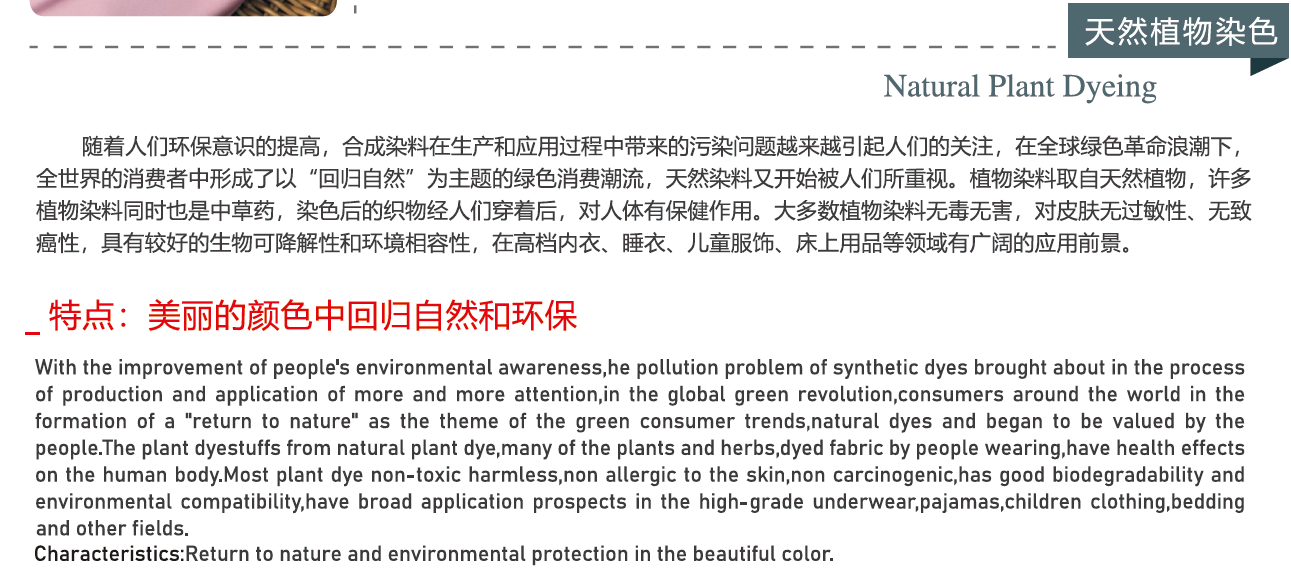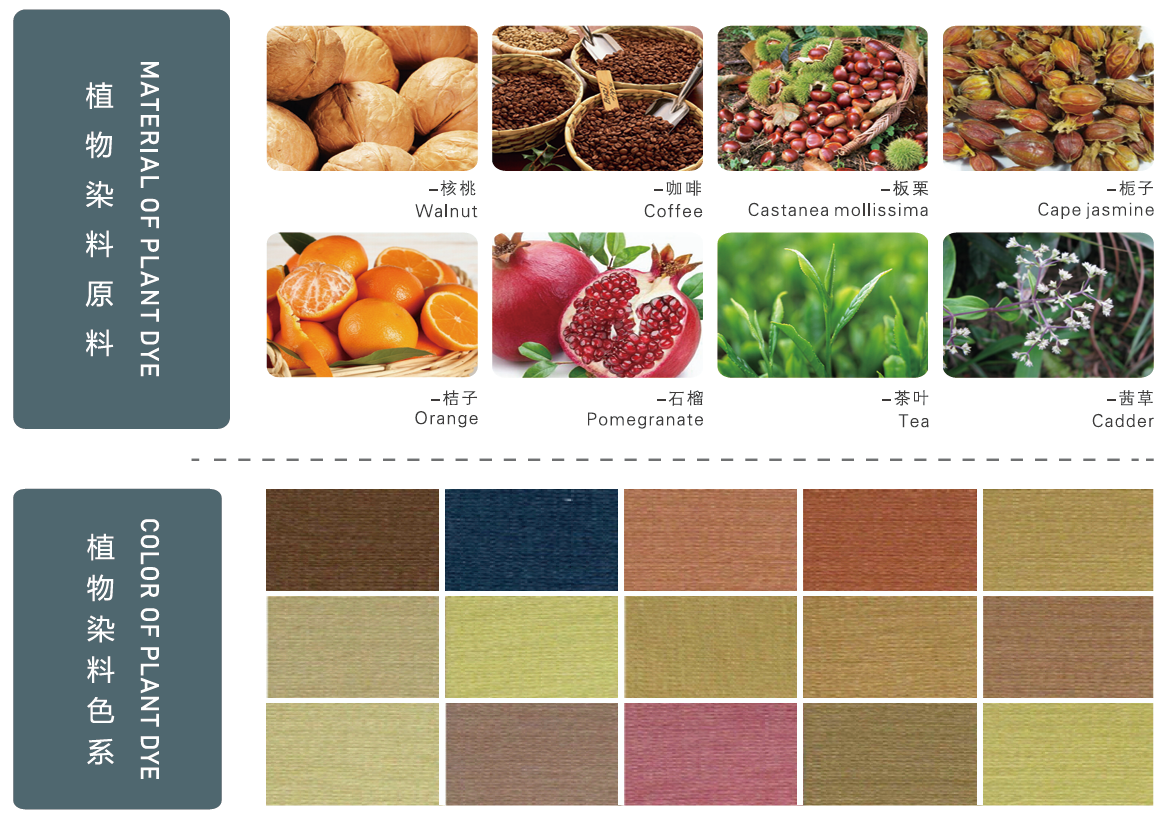
Before the birth of chemically synthesized dyes, humans had been obtaining color from nature for thousands of years-extracting blue from indigo grass, red from madder roots, yellow from turmeric, and brown from chestnut shells and gallnuts... Although these plant-derived colors are not as bright and eye-catching as synthetic dyes, they have a kind of warmth and tranquility that cannot be replicated. That is the color of nature itself.
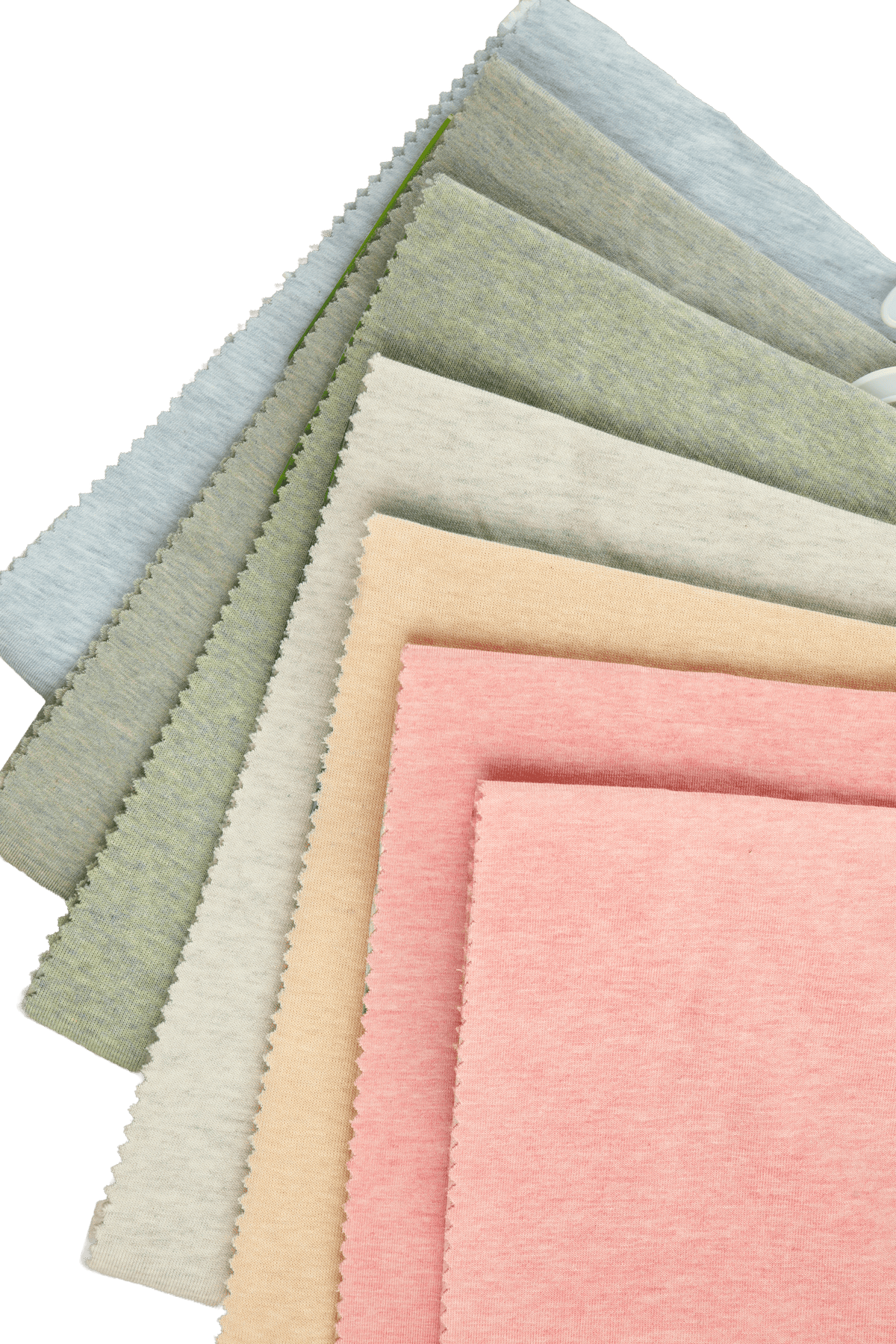
Guangyuan plant dyeing knitted fabrics allows this ancient craft to be reborn in modern textiles. We select plant raw materials from nature, obtain natural dyes through a gentle extraction process, and dye fabrics. Synthetic chemical dyes are not used throughout the dyeing process, reducing the introduction of harmful chemical substances. The fabric dyed by vegetable dyes has a natural and soft color. It does not have the dazzling feeling of chemical dyes. Instead, it has an old and gentle texture-its beauty lies precisely in the "imperfect" natural feeling. The dyeing of each batch may be slightly different, but this is the language of plants: each plant grows in different soils and different sunshine, and the colors it produces will certainly not be exactly the same. This is not a flaw, it is unique. In terms of hand feel, plant-dyed fabrics are usually fuller and softer than chemically dyed fabrics, and are extremely comfortable to wear closely. Some vegetable dyes also have good biodegradability and are more environmentally friendly. Products can be evaluated for quality by referring to FZ/T 73065 "Knitted Garments Dyed with Vegetable Dyes" and other relevant standards. Suitable for lingerie, home wear, infant products, etc. -the best gift for sensitive skin and people who pursue a natural lifestyle.& nbsp;
The brightness of chemical dyes is one kind of beauty, and the softness of plants is another. We choose the latter.